Guides
How to create a 3D model: modelling, scanning and generating, compared
Model by hand, scan with photogrammetry, or generate with AI. What each method is good for, what it costs in time, and how they combine.
3 min read

Quick answer
How do you create a 3D model?
There are three ways. Model it by hand in software like Blender or a CAD tool, which gives full control but takes time to learn. Scan a real object with photogrammetry, which copies something that exists. Or generate it with AI from text, a photo or a sketch, which is fastest for organic shapes but gives less precise control.
Start with what the model is for
A model for a 3D print, a game, an AR product page and an animated film all need different things. Before picking a method, decide:
- Does it need exact dimensions? Use CAD.
- Does it exist in real life? Scanning may be quickest.
- Will it be animated? You'll need clean topology and a rig.
- Is it one of fifty background props? Speed matters more than perfection.
Method 1: Model it by hand
Blender (free) for anything artistic, Fusion, Onshape or FreeCAD for engineering parts, ZBrush or Blender's sculpt mode for organic detail.
- Pros: total control, clean topology, you learn a skill.
- Cons: steep learning curve. Weeks to get comfortable, months to get good. How long it takes to learn Blender is honest about it.
Start with 3D modelling ideas for beginners if you go this way.
Method 2: Scan something real
Photogrammetry turns dozens of overlapping photos into a mesh. Phone apps with LiDAR do a quicker version.
- Pros: real-world accuracy and texture.
- Cons: the object has to exist, shiny and thin things scan badly, and the raw scan is heavy and messy.
Photogrammetry vs AI image to 3D compares the two photo-based routes.
Method 3: Generate it with AI
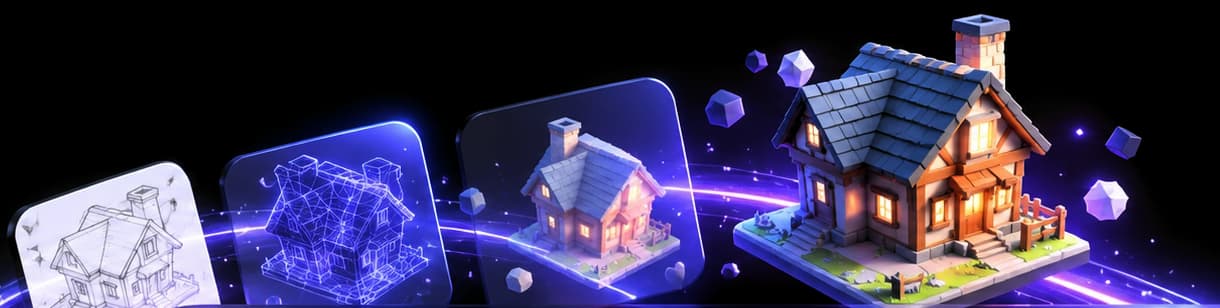
Describe it, photograph it or sketch it, and an AI generator builds a textured mesh.
- Pros: fastest route from idea to mesh, and no modelling skills needed to get started.
- Cons: the back is guessed, exact dimensions aren't, and the raw mesh is usually dense triangles. Thin parts are unreliable.
Vi3W is built for this: sketch, image or text in, a retopologised mesh out as GLB, FBX or OBJ.
The method most professionals actually use: all three
Real pipelines mix them. Block out or generate the shape quickly, scan the real-world parts, then refine by hand where it shows. An AI model makes a good sculpting base, and a greybox can become final props without modelling each one from zero.
Which to start with
- You want to learn 3D as a skill: Blender, plus AI for the props you don't want to model.
- You need one object this week: AI generation, then fix in Blender.
- You need a part that fits: CAD.
Try the fast route
Open Vi3W and turn a sketch or a photo into your first model.
Last reviewed