Guides
ChatGPT to 3D model: from an image you made in ChatGPT to a mesh
ChatGPT draws pictures, not meshes. Use its conversational editing to get a clean reference image, then turn it into a 3D model you can export.
2 min read

Quick answer
Can ChatGPT make a 3D model?
Not one you can open in Blender or print. ChatGPT draws images, and it can write code, but a usable textured mesh needs a 3D generator. The practical route is to have ChatGPT draw a clean reference of the object, edit it in conversation until it is right, then turn that image into a model with an image-to-3D tool.
Three things people mean by "ChatGPT 3D"
- A 3D-looking picture. ChatGPT's image generator can draw anything "in 3D style". It is still a flat image.
- Code that makes 3D. ChatGPT can write a Blender Python script or an OpenSCAD file that builds simple shapes: a box with holes, a vase, a bracket. That's real geometry, and it's fine for simple parts. For a character or a detailed prop, the code route falls apart.
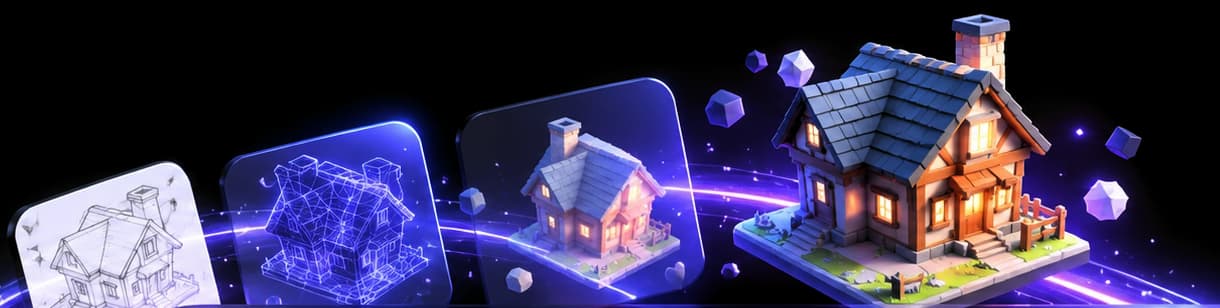
- A real model from an image. ChatGPT draws the reference; an image-to-3D generator makes the mesh. This is the route that works for organic and detailed objects, and it is what this guide covers.
ChatGPT's real advantage: editing by conversation
Other image tools make you reroll and hope. In ChatGPT you can say "same helmet, but remove the feather and show the whole thing" and it keeps the rest. That is exactly what preparing a 3D input needs: you get the design right first, then clean up the presentation.
Step 1: Design, then clean up
Start with the design in whatever style you like. Once it's right, ask for a reference version:
Keep this exact design. Show the whole object, centred, facing the camera, on a plain white background, with soft even lighting and no shadow under it. No text.
Things to ask ChatGPT to fix before you move on:
- Cropped edges. "Zoom out so the whole object is visible with space around it."
- Floating parts. "Connect the sword to the hand" or "remove the sparkles". Loose bits become blobs.
- Glass and chrome. Ask for a matte version. Reflective surfaces confuse every image-to-3D model.
AI 3D prompts has more wording that works.
Step 2: Ask for a second view
"Show the same object from the left side, same background and lighting." If the views agree, use both. Multi-view image to 3D explains why a second angle removes most of the guesswork.
Step 3: Make the mesh
Download the image at full size and upload it to an image-to-3D generator. In Vi3W the 3D step runs on TRELLIS by default, with Hunyuan 3D and Tripo on paid plans. Each one shows its XP cost before you run it.
Inspect the model from the back and from below. Then export GLB (web, Godot, three.js), FBX (Unity, Unreal) or OBJ (printing, Blender).
Do I need ChatGPT at all?
No. If you already have a sketch, a photo or a drawing, use that. ChatGPT is useful when the idea only exists in words. If you'd rather stay in one place, Vi3W's own text to 3D makes the image and the model in a single flow.
Try it
Upload your ChatGPT image to Vi3W and see the side you never drew.
Last reviewed