Vi3W
Skip to content

Use case · Game development

Fill your game with props, not grey placeholder cubes

For indie and small-team game developers shipping on Unity, Unreal Engine or Godot.

Quick answer

How can AI 3D generation help with game development?

It turns the slowest part of building a world, modelling dozens of props and set pieces by hand, into describing or sketching each one. Vi3W generates textured, retopologised models from text, sketches or photos and exports glTF or FBX for Unity, Unreal Engine and Godot. Artists keep their time for the hero assets players remember.

At a glance

What game development gets from Vi3W.

Inputs
Text prompt, hand-drawn sketch or reference photo
Exports
GLB / glTF, FBX, OBJ
Engines
Unity, Unreal Engine 5, Godot 4, Three.js
Topology
Automatic retopology on every model
Materials
AI-generated PBR textures
Runs in
The browser — no install, no local GPU

The 3D workflow with Vi3W

From a simple idea to a production-ready model, in four steps.

  1. 1

    Input

    Start with a text prompt, a sketch or an image.

  2. 2

    AI generation

    Vi3W creates a textured 3D model in seconds.

  3. 3

    Edit and refine

    Adjust style, geometry, materials and LOD.

  4. 4

    Export and use

    Export and import into your favourite tools.

From blockout to dressed scene

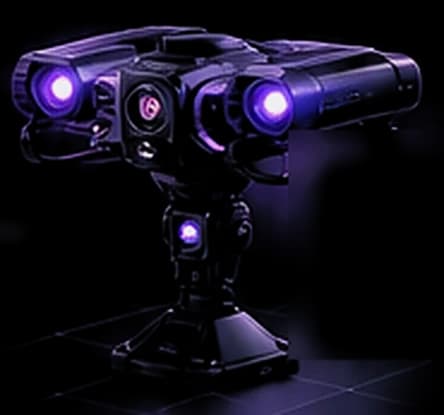
Most levels start as grey boxes. Vi3W replaces the boxes one prop at a time: describe a "mossy stone well" or sketch the silhouette of a market stall, generate it in the browser, and export it straight into your engine. Because the models are retopologised and textured, they behave like any other asset: you can light them, collide with them and build LOD levels from them.
Matching an art style

Consistency matters more than any single model. Keep prompts within one vocabulary, for example "hand-painted, chunky proportions, warm palette", or sketch every prop in the same hand, so assets read as one world. A sketch pins down silhouette and proportion better than a prompt, which makes sketch-to-3D the stronger choice when a designer already has concept art.

Getting assets into the engine

For indie and solo developers

A solo developer cannot model 200 props. Generated assets let one person dress a whole game world, prototype a level before committing to its art direction, and spend real modelling time only where the camera lingers: the main character, the signature weapon, the key landmark. Clean topology means a generated prop can still be opened in Blender and adjusted rather than rebuilt.

What this doesn’t do

  • Static meshes only. Vi3W does not rig or animate. Characters need rigging in Blender or another DCC tool before they can move.
  • One object at a time. It generates props and pieces, not whole levels or scenes.
  • Hero assets need a modeller. Treat generated characters as a strong first draft. Anything that deforms up close needs edge loops planned by a person.
  • Disclosure is your job. Some storefronts, including Steam, ask developers to disclose AI-generated content that ships in a game. Check the current rules for every store you release on.

Recommended formats

Choose the right format for your workflow.

Recommended 3D formats by workflow
FormatBest forNotes
GLB / glTFWeb, AR/VR, Godot, Three.js, BlenderRecommended. One file carries the mesh, UVs and PBR textures.
FBXUnity, Unreal Engine, DCC pipelinesWidely supported. Unity imports it natively.
OBJLegacy tools, 3D printing prepMesh and UVs only. Its .mtl predates metallic and roughness maps.
USDZAR on iPhone and iPad (Quick Look)Not a direct export. Convert the GLB in Blender or Reality Converter.

Tool integrations

Import Vi3W models into popular tools.

Frequently asked questions

Optimal polygons for a game engine?

There is no single number: the budget depends on the platform, how many copies are on screen and how close the camera gets. Spend polygons on silhouettes, use normal maps for surface detail, and give anything seen from a distance LOD levels. Then profile on your target hardware, because draw calls, shaders and textures often cost more than triangles.

Whats the place for placeholders?

Placeholders let you test gameplay before you pay for art: scale, sightlines, pacing and readability. Grey boxes work, but placeholders with roughly the right shape and colour test more of the game. Generated models fill that gap cheaply, and the best ones can be refined into final assets rather than thrown away.

Why Is A.I. Generated Content Like Music & Images Looked Down Upon In Video Games?

Mostly because of undisclosed use, inconsistent quality, and concern about how training data was sourced and about artists' jobs. Players react worst when AI content looks generic or is hidden. Using it openly, disclosing it where stores require, and keeping humans in charge of art direction and hero assets addresses most of those concerns.

Capabilities, integrations and terms for this workflow.

Game development

Generate your first prop

Free monthly credits. Export straight to Unity, Unreal or Godot.

Last reviewed