Guides
An honest AI 3D workflow for 3D artists
A practical, honest AI 3D workflow for artists: what to generate, what to keep by hand, and how to take an AI model through Blender into an engine.
3 min read
Quick answer
How should 3D artists use AI in their workflow?
Use AI generation for the work that is slow but not personal: blockouts, background props, variations and first drafts. Keep human judgement for art direction, hero assets, topology that has to deform, and final texturing. A practical pipeline generates a model, cleans it up in Blender, and finishes it by hand only where the camera and the player will look.
Start with the split: chore or craft?
Every 3D project mixes two kinds of work. Some of it is craft: deciding what a character looks like, shaping a silhouette that reads at a distance, planning edge loops around a face that has to talk. Some of it is chore: the fortieth barrel, the third variation of a lamp post, a quick blockout to test whether a room feels the right size.
AI generation is good at chores and poor at craft, so the honest workflow is to sort the work first. Ask of each asset: would anyone notice if it were replaced by a slightly different one? If not, generate it. If the answer is yes, it is a hero asset, and a person should own it.
Where AI generation earns its place
- Blockouts and greyboxing. A generated model with roughly the right shape tests scale and composition better than a cube.
- Background props and set dressing. The objects that fill a scene but never take focus.
- Variations. Five versions of a chair to choose from, generated from small changes to one prompt or sketch.
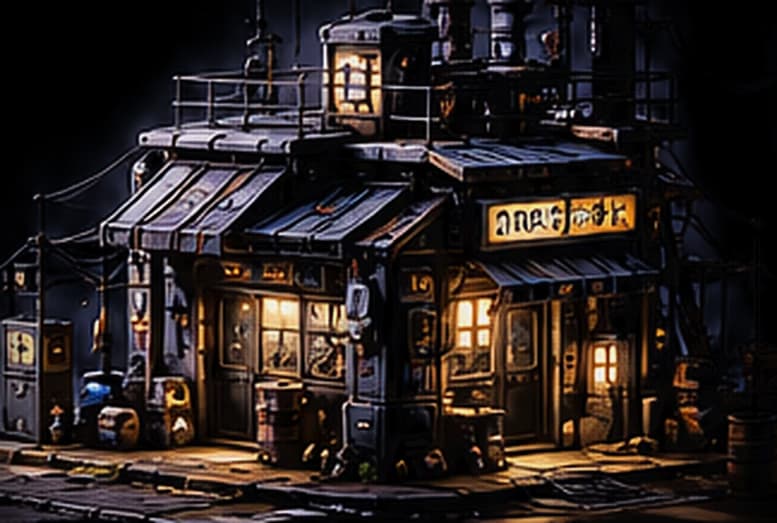
- Concept exploration. Turning sketches into rotatable models to judge form from every angle before anyone commits days of modelling.
- Starting points. A first draft you refine, instead of an empty scene.
Where it should not lead
- Hero characters and key props. These carry the identity of the project. Use generation for exploration, then model or heavily rework the final.
- Anything that deforms up close. Faces, hands and joints need edge loops planned for animation. Automatic retopology gives a clean, light mesh, but it cannot know where an animator needs extra loops.
- Art direction. A generator has no idea what your project should feel like. Consistency across a whole game comes from a person deciding the rules.
A practical pipeline
- Sketch or describe the asset. A sketch fixes the silhouette you want. A prompt is faster but looser. Keep one style vocabulary for the whole project, so assets belong together.
- Generate and choose. Generate a few candidates and keep the one with the best silhouette, not the best render. Lighting can be fixed; shape is harder.
- Bring it into Blender. Import the GLB (see the Blender guide), check the scale, apply transforms and look at the wireframe.
- Clean up what matters. Fix shapes, merge stray geometry, adjust UVs if you will repaint, and decimate copies for lower LOD levels.
- Finish by hand where it counts. Repaint or retexture to your project's style, and give hero assets the time you saved on the rest.
- Export to the engine and test the asset in context, in the real lighting, at the real camera distance.
Keep it honest
Two habits keep AI in a pipeline from causing problems later. First, know the rules of where you ship: some storefronts, including Steam, ask developers to disclose AI-generated content that ends up in a game. Second, credit and check your inputs: if a sketch, photo or reference is not yours, you need the rights to use it, because a generated model inherits whatever problems its input had.
Used this way, AI does not take the craft out of 3D. It takes out the chores that kept artists from spending more time on the craft.
Frequently asked questions
Will AI replace artists?
Not the artists who decide what things should look like. AI is replacing some of the repetitive production work: blocking out shapes, making the fiftieth crate, drafting variations. It does not replace taste, art direction or the judgement to fix what a generator gets wrong. Artists who use it for the repetitive parts spend more of their time on the work only they can do.
Dall-E 2 Is digital art in danger?
Image generators changed how quickly a picture can be made, not whether skilled art is needed. In 3D the gap is even wider: a generated model still needs sensible topology, clean UVs, correct scale and a coherent style before it belongs in a game or film. The demand is moving towards artists who can direct and finish AI output, not away from artists.
Last reviewed