Guides
3D billboards: how anamorphic billboards work, and how to make content for one
How anamorphic 3D billboards work, famous examples like Tokyo's Shinjuku cat, how the content is produced, what drives cost, and the 3D assets you need.
 Aman Porwal on LinkedIn (opens in a new tab)Founder @ Vi3W
3 min read

Quick answer
How do 3D billboards work?
Most "3D billboards" are flat LED screens, often curved around a building corner, playing video rendered with anamorphic, or forced, perspective. The image is distorted so that from one viewing spot on the street it looks like an object is popping out of the screen. Move away from that spot and the illusion breaks.
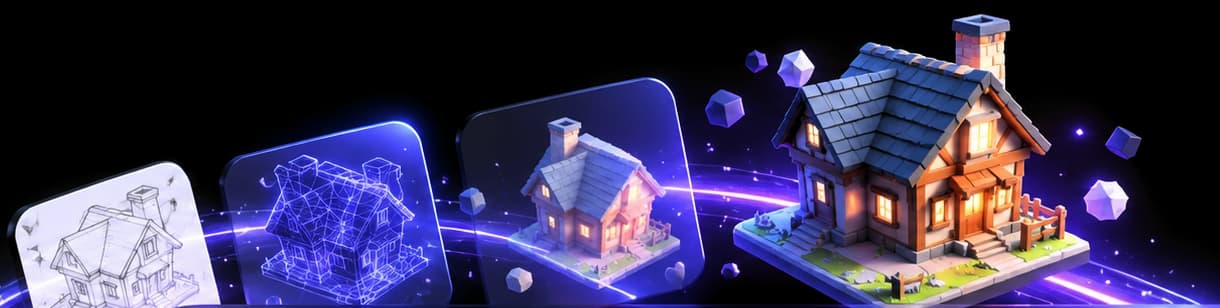
The trick: forced perspective on a flat screen
A 3D billboard doesn't project anything into the air. It's a normal LED screen, and the 3D effect comes from the content. Artists render the scene from the point of view of a person standing at a chosen spot on the street. From that spot, the distorted image lines up so that objects seem to come out of the screen. From anywhere else it looks stretched.
Curved corner screens make the effect much stronger. When one screen wraps around a building corner, two faces meet at an angle, and content can appear to sit inside a box or lean out across the corner.
The example everyone knows
In July 2021, a giant 3D calico cat appeared on Cross Shinjuku Vision in Tokyo, a curved 4K LED screen wrapping a building corner above Shinjuku Station's east exit. Coverage noted that the content was designed around the screen's shape and position for viewing from the east exit square. Videos of it spread worldwide, and anamorphic screens have since become a fixture of big-city advertising.
How the content is made
- Survey the screen: exact dimensions, the corner angle, pixel resolution and where viewers stand.
- Rebuild it in 3D: model the screen surfaces and the building in a 3D scene.
- Place a camera at the viewing spot: the "sweet spot" where the illusion works.
- Build the content inside a virtual box that extends behind the screen surfaces, with objects that break out of it.
- Render from the viewer's camera, then project onto the screen surfaces. This bakes in the anamorphic distortion.
- Test on a mock-up, then on the real screen, from the street.
The 3D assets (the product, character or creature) are the same kind of assets as any CGI ad, and they need to look good up close and very large.
What drives the cost
Published price data for 3D billboards is scarce, so think in terms of what you pay for:
- Media: booking the screen, the biggest line in prime locations.
- Content production: anamorphic setup, assets, animation and rendering, typically from a specialist CGI studio.
- Assets: a product model or character, which you can reuse in social ads.
- Filming the result: most of the reach comes from people sharing videos of the billboard, so many brands plan their own capture.
For production pricing benchmarks, see CGI ad costs.

The assets you'll need
- Hero object: a product, mascot or creature. It will be seen huge, so detail matters.
- The box environment: the inside of the screen's "box", often stylised.
- Animation: the moment of breaking out, which is what people film.
Vi3W can produce the asset drafts: generate a product, mascot or creature from a photo, sketch or description, comparing 25 image-to-3D models on the same image. Add bones (humanoid, or It's an animal for creatures) and Make it move add preset motions like Idle, Walk, Jump, Wave and Dance. New paint job tries looks, and GLB, FBX and OBJ downloads are free for the studio's pipeline. At billboard scale an artist will refine hero assets, but drafts speed up concepting and pitching. See creature 3D models for animal characters.
Can you do 3D billboard-style content for social only?
Yes, and many brands do. "Fake out-of-home" (FOOH) ads composite a 3D billboard or stunt into footage without booking a screen. See CGI ads for how that works, and why it attracts criticism when it isn't labelled.
Open Vi3W to draft the hero asset for your billboard pitch.
Frequently asked questions
how do 3d billboards work
They're flat LED screens, often curved around a building corner, playing video rendered with forced perspective so it looks 3D from one viewing spot on the street.
3d billboard how to make
Survey the screen and viewing spot, rebuild it in 3D, render the content from the viewer's camera position, map it onto the screen surfaces, then test on a mock-up and on site.
3d billboard cost
Published prices are scarce. The main lines are the media booking, the anamorphic content production and the 3D assets, plus filming the result for social reach.
Last reviewed