Guides
Blockbench import: using an AI-generated model as a reference for a blocky model
Import OBJ or glTF into Blockbench's Generic Model format, why a dense AI mesh won't become cubes, and how to block out over it instead.
2 min read

Quick answer
Can you import a 3D model into Blockbench?
Yes, in the Generic Model format. Blockbench can open OBJ files, and a plugin in its official repository adds glTF and GLB import. Some data is lost on import, and a dense AI mesh doesn't become a cube-based model. It is best used as a reference to build cubes over, which keeps the blocky style Blockbench is made for.
What Blockbench is for
Blockbench is a free modeller for blocky, low-poly models with pixel-art textures: Minecraft entities and items, Hytale-style characters, and the chunky look of many indie games. Its models are made of cubes, or simple meshes, with small hand-painted textures.
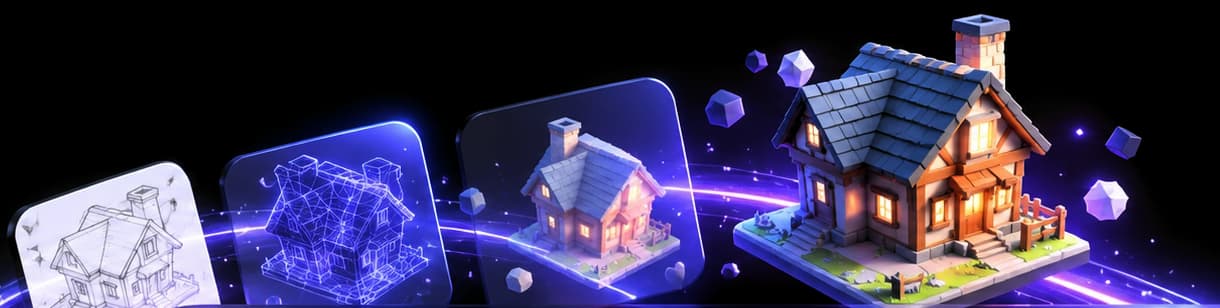
An AI generator's output is the opposite: a smooth, dense mesh with a photo-like texture. So the useful question isn't "can I import it" but "what do I do with it once it's in".
Importing
Use the Generic Model format, which has the fewest limits. Blockbench's format documentation lists what each format supports.
- OBJ: File › Import › OBJ. Built in.
- glTF / GLB: install the glTF importer from File › Plugins, then import.
Expect some loss: Blockbench warns that importing from OBJ or glTF drops some data. Scale may also be off, because Blockbench works in 1/16 block units. Resize after import.
If the mesh is heavy, Blockbench gets slow. Decimate it in Blender first, or export a retopologised model from Vi3W.
The useful workflow: trace with cubes
- Import the AI model as a reference. Lower its opacity or lock it.
- Block out the main volumes with cubes over it: head, torso, limbs. Keep the cube count low.
- Hide or delete the reference.
- Paint the texture in Blockbench's paint tools, at your game's pixel density. Use the AI model's colours as a palette guide, not as a texture.
- Export as your target format: Java or Bedrock for Minecraft, or glTF and OBJ for engines.
This keeps proportions you'd struggle to get by eye, while the result still looks hand-made in the right style.
Why not use the AI mesh directly?
- Minecraft formats need cubes. A triangle mesh won't export to them.
- A photoreal texture on a blocky game reads as out of place.
- Thousands of triangles make Blockbench's editing tools sluggish.
For a game that's low-poly but not blocky, an AI low-poly model may work as is: AI low-poly 3D model generator.
Try it
Generate a reference in Vi3W from your sketch, export OBJ, and block it out in Blockbench.
Last reviewed